First impressions dictate the long-term success of any physical gathering, making a modern event check-in system the operational backbone of professional hospitality and corporate enterprise events. Whether orchestrating a multi-day global technology summit, a high-stakes corporate gala, or a massive music festival, the entry threshold represents the ultimate make-or-break moment for attendee satisfaction. Furthermore, when thousands of eager participants converge on a single venue simultaneously, traditional paper-based guest lists and slow, single-lane bottlenecks instantly trigger widespread frustration and severe brand damage. Consequently, modern event planners must abandon outdated methods in favor of sophisticated, multi-tier entry architectures that leverage enterprise-grade hardware and intelligent software solutions.
Implementing an advanced ATS Event Gate Ticketing & Access Control platform transforms chaotic arrival zones into seamless, highly efficient gateways. By segmenting attendee categories, deploying mobile-first hardware, and monitoring real-time data feeds, organizers eliminate friction before it starts. In this comprehensive guide, we will explore the engineering, psychology, and logistical workflows required to design a bulletproof arrival architecture that keeps queues moving and stakeholders smiling.
Understanding the Multi-Tier Event Check-In System Architecture
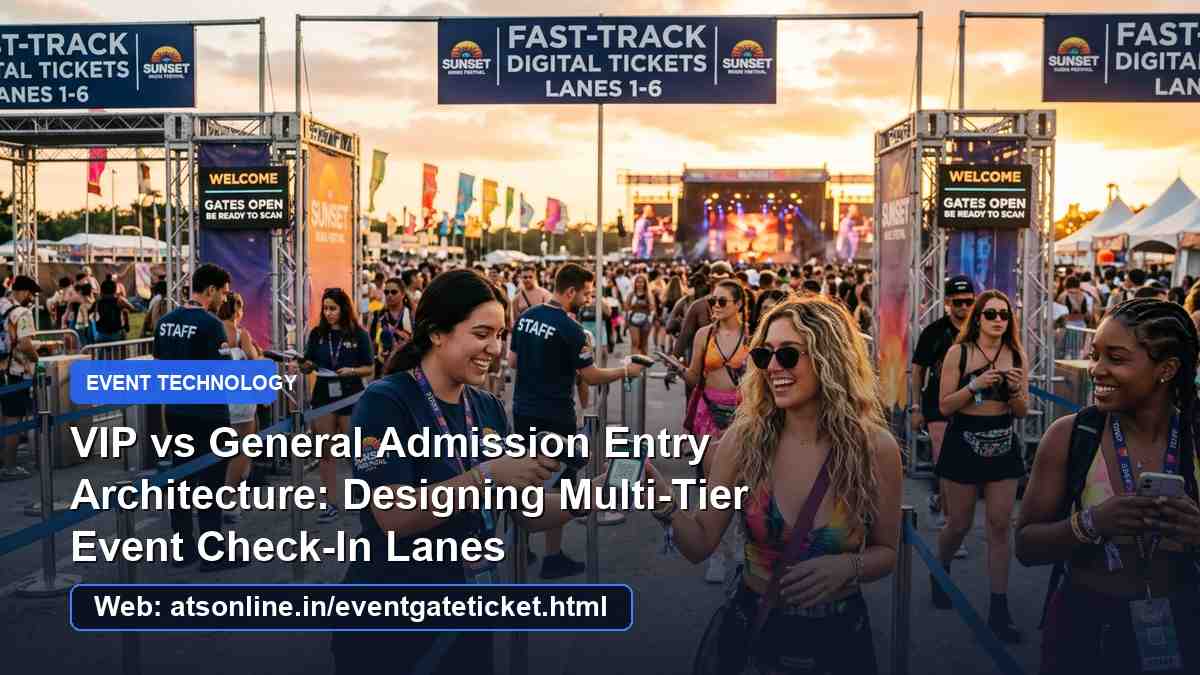
A multi-tier entry architecture recognizes a fundamental truth of modern hospitality: not all attendees require the same level of welcome, validation, or credentialing. Enterprise events typically cater to diverse stakeholder groups, including VIP keynote speakers, premium sponsors, media personnel, general admission ticket holders, and onsite walk-ups. Therefore, forcing every participant through the exact same physical bottleneck creates operational gridlock. By dividing arrival flows into dedicated tiers, event organizers establish specialized processing lanes that match the exact validation requirements of each credential type.
Moreover, architectural separation extends beyond mere physical rope barriers; it requires a synchronized software backbone that instantly recognizes ticket classifications, prints appropriate badges on demand, and denies unauthorized entry attempts. When deployment teams integrate robust access control tools, they drastically reduce validation errors. For example, a system configured for multi-tier routing ensures that high-profile guests receive white-glove treatment while general crowds stream through automated pedestals at high velocity.
Key Insight: Multi-tier entry architecture prevents premium stakeholders from waiting in general admission queues, directly protecting the perceived value of VIP registrations and corporate sponsorships.
The Critical Difference Between VIP and General Admission Flows
Managing VIP event access control requires a completely different operational mindset compared to handling high-volume general admission check-in procedures. VIP guests, executive speakers, and celebrity participants expect an immediate, frictionless welcome upon arrival. They have zero tolerance for waiting behind misplaced tickets or unresolved registration discrepancies. Consequently, VIP lanes must feature dedicated concierge-style terminals where event staff can verify credentials instantly, hand out curated welcome bags, and provide personalized directional guidance without slowing down the surrounding foot traffic.
Conversely, general admission check-in focuses almost entirely on throughput velocity, speed, and automation. Attendees carrying digital bar-codes on their smartphones expect a self-service style or rapid-tap interaction that takes less than three seconds. By utilizing a specialized mobile ticket scanner for events, front line personnel can quickly validate PDF tickets, Apple Wallet passes, and printed QR codes while standing anywhere in the arrival zone. Furthermore, separating these two distinct operational philosophies ensures that a hiccup in general ticket processing never cascades upward to disrupt VIP arrivals.
- VIP Lanes: Focus on high-touch hospitality, instant badge printing, and concierge-style verification.
- General Admission Lanes: Focus on high throughput, rapid bar-code scanning, and self-service kiosk integration.
- Media & Staff Lanes: Feature credential re-validation, press-kit distribution, and security clearance checks.
Designing Segregated Lane Queues and Stanchion Layouts
Physical spatial design plays an equally vital role in achieving rapid throughput during peak arrival surges. Effective event queue management software cannot compensate for poorly placed stanchions, confusing signage, or bottle necked entry doors. Event architects must design a funnel-shaped queuing layout that guides attendees smoothly from the exterior drop-off zone straight toward dedicated lane markers. Furthermore, clear, high-contrast overhead signage must designate each lane category long before guests reach the actual scanning pedestals.
In addition to clear signage, venue layouts should incorporate adequate buffer zones immediately past the validation point. When attendees clear the check-in gate, they naturally pause to adjust coats, check phones, or figure out where to go next. If this post-check-in clearing zone is too small, a human roadblock forms instantly, backing up the entire lane regardless of how fast the scanning hardware operates. Therefore, creating a spacious “decompression zone” right behind the entry gates is non-negotiable for sustaining high throughput.
Deploying Mobile Check-In Ushers for Dynamic Queue Busting
Even the most meticulously planned stanchion layouts can experience sudden, unexpected arrival surges—such as when thirty tour buses pull up simultaneously outside a convention center. To combat these inevitable spikes, smart organizers deploy roaming mobile check-in ushers equipped with handheld validation devices. These dynamic queue busters actively patrol the waiting lines outside the physical venue doors, scanning attendee bar-codes and verifying registrations while guests are still standing in the queue.
Consequently, by the time these pre-vetted attendees reach the primary entry gates, their tickets are already marked as redeemed in the central database. This proactive approach transforms traditional waiting time into productive processing time, slashing overall wait metrics significantly. Moreover, this flexibility demonstrates the true power of an agile event check-in system that scales dynamically to match real-time crowd pressures rather than relying solely on fixed, stationary box office windows.
Real-Time Attendee Tracking and Live Analytics Dashboards
Data visibility is the ultimate superpower for modern event operations teams. Relying on end-of-day headcounts is no longer acceptable when managing complex venues, fire-code capacities, and dynamic scheduling. A sophisticated access control platform provides live operational dashboards that stream real-time attendee tracking data directly to management tablets and control rooms. Organizers can instantly monitor total check-in counts, peak arrival intervals, lane-by-lane velocity, and no-show percentages with absolute precision.
- Track hourly arrival velocity to predict catering and seating demands accurately.
- Identify under performing lanes and reallocate roaming staff dynamically.
- Monitor live venue occupancy levels to ensure compliance with strict fire safety regulations.
- Generate automated attendance reports instantly upon event closure for stakeholder reviews.
Furthermore, this granular visibility enables security teams and hospitality managers to make proactive, data-driven decisions on the fly. If a specific entrance experiences a sudden surge, supervisors can immediately deploy additional mobile ushers to that exact zone. In addition, real-time metrics provide invaluable insights for future planning, helping marketing and logistics teams optimize registration windows for subsequent editions of the event.
Integrating Primary Ticketing Partners and On-Site Box Offices
Fragmented technology stacks represent the single greatest point of failure for modern event check-in operations. When registration databases, third-party ticketing platforms, and onsite box office systems operate in isolated silos, reconciliation nightmares and long lines are guaranteed. Therefore, selecting a comprehensive solution like ATS Event Gate Ticketing & Access Control ensures seamless API synchronization across all major ticketing ecosystems. Whether attendees purchase badges months in advance or walk up to the onsite box office at the last minute, their data flows instantly into the master validation database.
Moreover, robust onsite box office integration allows staff to process walk-up credit card payments, print RFID-enabled wristbands or physical badges on demand, and link those credentials to the attendee profile within seconds. This elimination of manual data entry prevents spelling errors, reduces fraudulent ticket duplication, and ensures that every single person entering the venue is fully accounted for in the master system.
Key Insight: Unified ticketing integration eliminates data silos, allowing walk-up registrations and pre-sold tickets to sync instantly across all mobile scanners and gate terminals.
Best Practices for Reducing Entry Wait Times to Under 30 Seconds
Achieving a sub-30-second check-in experience requires a harmonious blend of hardware reliability, staff training, and attendee preparation. Event organizers cannot rely solely on software capabilities; they must enforce rigorous operational best practices across the entire front line team. By standardizing procedures and preparing for edge cases, production crews ensure that the entry experience feels effortless for every guest who walks through the door.
- Pre-Event Digital Communication: Send automated reminder emails 24 hours prior with prominent QR codes and instructions to add tickets to Apple Wallet or Google Pay.
- Hardware Redundancy: Always equip scanning stations with battery backup packs and offline caching capabilities to prevent local internet outages from halting the line.
- Comprehensive Staff Training: Conduct mandatory simulation drills for all ushers and box office staff before doors open to the public, focusing on troubleshooting common scanning errors.
- Clear Way finding Signage: Utilize large, color-coded directional banners outside the venue to distribute crowds evenly across all available entry lanes.
Furthermore, testing all mobile ticket scanners and badge printers under full network load prior to the event guarantees that technical glitches are identified and resolved before guests arrive. Implementing these proven protocols transforms the arrival gateway from a stressful choke point into a welcoming red-carpet experience.
Conclusion: Elevating Attendee Experience with ATS Event Gate
In conclusion, mastering multi-tier entry architecture is essential for any organization striving to deliver world-class hospitality and secure corporate events. By deploying a robust event check-in system, event planners can effectively eliminate long queues, protect VIP exclusivity, and harness real-time data to optimize venue flow. Furthermore, leveraging advanced mobile hardware and integrated ticketing ecosystems ensures that your operational team remains agile, responsive, and completely in control throughout the entire event life cycle.
Ready to revolutionize your next festival, conference, or enterprise gala with industry-leading entry management? Visit the official ATS Event Gate Ticketing & Access Control platform to explore advanced features, hardware specifications, and customizable deployment options. To discuss your specific venue requirements or schedule a personalized enterprise demonstration, please contact our solutions team today and let us help you design the ultimate guest arrival experience.
Frequently Asked Questions About Event Check-In System
How does a multi-tier event check-in system separate VIPs from General Admission?
A multi-tier system utilizes intelligent software categorization combined with physical lane segregation. When a guest presents their credential, the scanning device instantly reads the ticket tier embedded in the bar-code or RFID chip. VIP credentials trigger concierge-style validation workflows and immediate badge printing in designated low-density lanes, while general admission tickets are processed rapidly through high-velocity self-service or usher-managed turnstiles, ensuring zero cross-contamination between guest tiers.
Can mobile handheld scanners integrate with third-party ticketing platforms like BookMyShow?
Yes, enterprise-grade access control platforms feature robust API integrations that sync seamlessly with major third-party ticketing partners, box office software, and registration databases. This synchronization ensures that whether an attendee purchases a ticket months in advance or buys a walk-up pass at the onsite box office, their validation status updates across all mobile handheld scanners and gate terminals in real time.
What is the average check-in speed achieved using segregated lane architectures?
When utilizing optimized mobile ticket scanners and well-designed stanchion layouts, professional event teams consistently achieve an average check-in speed of 2 to 4 seconds per general admission attendee. VIP and media check-ins may take slightly longer due to additional hospitality protocols and on-demand badge printing, but dedicated lanes ensure this never slows down the surrounding high-volume general traffic.
How do roaming ushers help manage peak arrival surges at large festivals?
Roaming ushers act as dynamic queue busters by patrolling exterior waiting areas with mobile handheld scanning devices. By scanning attendee tickets while they are still standing in the entry queue, these ushers pre-validate the credentials in the central database. Consequently, guests arrive at the physical gates already checked in, dramatically accelerating throughput and dissolving unexpected arrival bottlenecks instantly.
What real-time data metrics can organizers track on the mobile dashboard during an event?
Organizers have access to a comprehensive live analytics dashboard that tracks total check-in counts, peak arrival timestamps, lane-by-lane throughput velocity, no-show percentages, and current venue occupancy levels. These real-time metrics allow management teams to monitor fire-code compliance closely, reallocate front line staff dynamically, and generate instant attendance reports upon event closure.
Ready to Modernize Your Event Ticketing?
Stop losing money on unsold coupon booklets and eliminate long lines with on-demand thermal coupon printing.
🏢 Advance Technology Systems (ATS)
🌐 Website: https://atsonline.in/eventgateticket.html
📞 Phone: +91 9810078010
✉️ Email: ats.fnb@gmail.com
💬 Inquiries: Contact Us at Labhak