
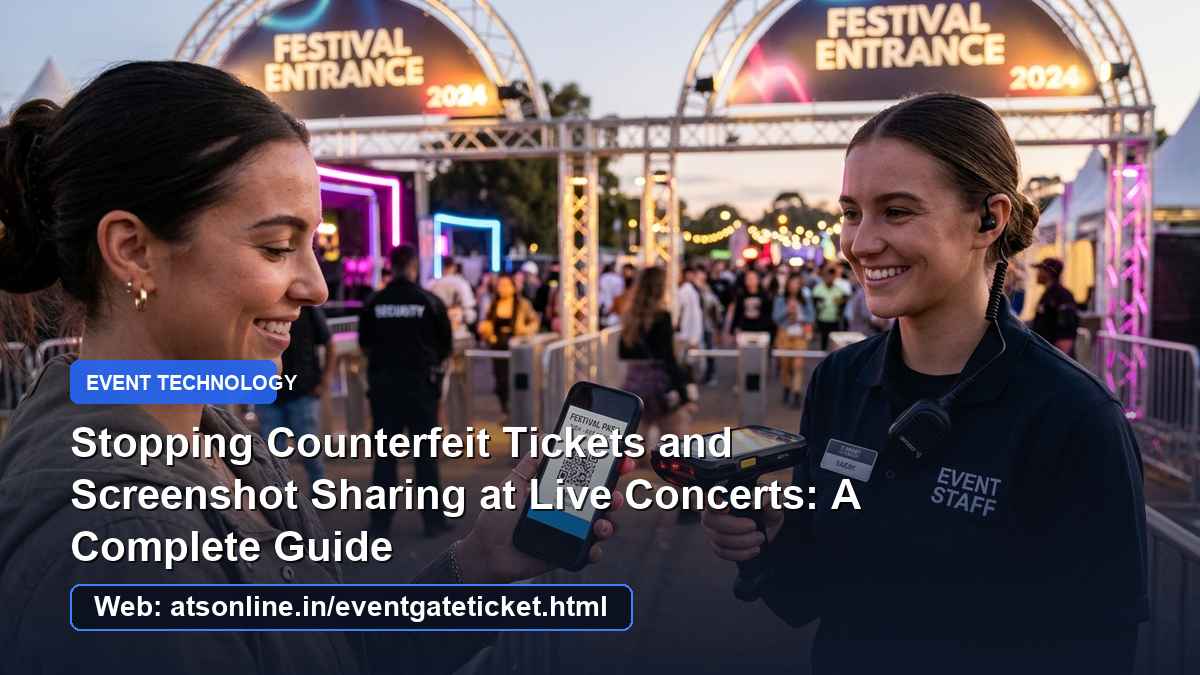
Welcome to the ultimate guide on modern ticket fraud prevention, where we explore how modern venues protect their bottom lines against rising security threats. Live entertainment is experiencing an unprecedented renaissance, yet this massive surge in fan attendance brings a dark underbelly of sophisticated gate-crashing, digital forgery, and revenue leakage. Concert promoters and venue operators invest months curating unforgettable live experiences, only to watch thousands of dollars vanish at the perimeter gates due to forged passes and exploited digital links. Therefore, deploying robust enterprise-grade access technology is no longer optional; it is an existential requirement for sustainable event management.
When thousands of eager fans swarm stadium turnstiles simultaneously, front line security staff face immense pressure to keep lines moving fast. Unfortunately, fraudsters actively exploit this exact chaos by utilizing low-tech scams like high-resolution screenshots, cloned PDF printouts, and sophisticated counterfeit bar coding. Consequently, unauthorized attendees slip past concert security, leading to severe overcrowding hazards, massive compliance violations, and intense brand reputation damage. To fight back, organizers must implement advanced security workflows that neutralize digital threats before fraudulent guests ever reach the physical gate.
The Growing Threat of Counterfeit Tickets and Screenshot Sharing
The modern ticketing landscape has shifted overwhelmingly toward digital-first ecosystems, bringing tremendous convenience alongside unprecedented security vulnerabilities. While mobile apps make ticket distribution seamless, they also introduce glaring loopholes that bad actors ruthlessly exploit. Furthermore, the casual sharing of digital passes has morphed from a minor administrative headache into a multi-million-dollar organized crime enterprise.
Consider how easily a malicious buyer purchases a single legitimate ticket, saves a crisp screenshot of the dynamic bar code, and distributes that exact image across social media marketplaces to five unsuspecting victims. When these five individuals arrive at the venue, chaos ensues at the entry lanes. The first person scans successfully, while the subsequent four individuals trigger loud error alarms, creating volatile verbal confrontations with front line gate staff.
To combat this escalating crisis effectively, event producers must look beyond outdated visual checks and adopt comprehensive ticket fraud prevention frameworks. Standard visual inspections fail because security guards cannot visually differentiate between an authentic native wallet pass and a manipulated screenshot. Furthermore, relying on manual inspection slows entry throughput down to a crawl, creating massive street-side queues that anger legitimate patrons and invite further security breaches.
Organizers must transition toward comprehensive digital validation suites that instantly interrogate every single bar code at the point of entry. By deploying sophisticated solutions like ATS Event Gate Ticketing & Access Control, operations teams eliminate the guesswork associated with manual visual gate checks. Ultimately, sealing your venue perimeter requires a synchronized blend of cryptographic tokenization, offline device syncing, and rugged scanning hardware designed for high-throughput live environments.
How Single-Claim Cryptographic Tokens Eliminate Duplicate Entries
Traditional static bar-codes are fundamentally broken because they represent a fixed string of data that can be copied infinitely without degradation. Cryptographic tokens, however, fundamentally rewrite the rules of modern access control by ensuring every single ticket features a time-sensitive, single-use digital signature. Every time an attendee generates or presents their pass, the underlying token changes dynamically, making static screenshots entirely useless.
When a scanner reads a cryptographic token at the venue entrance, the system validates the digital signature against a secure ledger. If the token has already been claimed and marked as redeemed, the system instantly rejects any subsequent attempts to use that same identifier. Consequently, even if a fraudster generates ten high-resolution screenshots of the original purchase confirmation, only the very first scan grants physical entry.
Implementing cryptographic validation safeguards your venue against the most pervasive forms of digital manipulation. Here is how single-claim tokenization secures your perimeter:
- Dynamic Hashing: Every scan generates a unique cryptographic hash that expires immediately after successful validation.
- State Tracking: The system continuously updates ticket states across all connected gates from “Valid” to “Redeemed.”
- Replay Attack Blockers: Automated algorithms detect and block repeated replay requests originating from duplicate device sessions.
- Instant Rejection: Gate screens display clear, color-coded denial alerts the moment a duplicate token is presented.
By integrating these advanced cryptographic security measures into your event workflow, you drastically minimize revenue loss from unauthorized gate-crashing. Modern ATS Event Gate Ticketing & Access Control software handles these complex cryptographic exchanges in milliseconds, ensuring absolute security without sacrificing entry speed.
Key Insight: Static bar-codes act like open doors, whereas cryptographic tokens function like single-use keys that self-destruct the absolute second they are turned in the lock.
Stopping Screenshot Sharing and Pass backs at Venue Perimeter Gates
Beyond digital duplication, physical pass backs represent a persistent challenge during peak arrival windows at major festivals and concerts. A legitimate ticket holder enters the venue grounds, walks past the primary turnstiles, and secretly hands their physical wristband or mobile device back over a perimeter fence to an awaiting accomplice. Stopping this behavior requires intelligent perimeter design paired with proactive gate access control protocols.
Modern access management software introduces intelligent cool down timers and geo-fenced validation rules to thwart passback schemes entirely. For example, if a ticket scans successfully at Gate A, the system flags that specific credential and prevents it from being scanned at any other gate for a designated time window. Furthermore, deploying exit-scanning protocols forces attendees to scan out when leaving temporary re-entry zones, ensuring that incoming credentials match verified exit logs.
Front-line staff training remains a critical pillar of any successful ticket fraud prevention strategy. When security personnel understand how to interpret mobile device indicators—such as active wallet animations versus static image files—they can intercept fraudulent attempts before physical gate congestion occurs. Combining well-trained human oversight with intelligent software alerts creates an impenetrable barrier against unauthorized entry.
The Power of Offline Duplicate Detection and Local Device Sync
One of the greatest fears for event organizers deploying digital ticketing solutions is cellular network failure. Stadiums, festival grounds, and remote outdoor concert venues are notoriously plagued by overloaded mobile towers, thick concrete walls, and dead zones that disrupt cloud connectivity. If a ticketing system relies strictly on real-time cloud communication, a sudden internet outage can paralyze entry gates completely, forcing staff to wave crowds through blindly.
Advanced event ticketing security software solves this vulnerability by utilizing localized offline database caching. Before venue gates open, the complete manifest of valid cryptographic ticket tokens downloads directly to each local scanning device. As attendees arrive, the handheld scanner validates every bar code locally against this offline database in milliseconds, entirely independent of external Wi-Fi or cellular availability.
To ensure total security across multiple entry points during offline operation, devices synchronize their local scan logs continuously over a secure, localized mesh network. If Device A at the North Gate scans a valid ticket, that scan record propagates instantly via local peer-to-peer syncing to Device B at the South Gate within fractions of a second. Consequently, even if your venue loses internet connectivity entirely, duplicate tickets are detected and blocked instantly across the entire perimeter.
Rugged 2D Laser Scanners for Fast, Flawless Low-Light Scanning
The physical hardware used at your venue gates dictates the speed, efficiency, and ultimate success of your entry operations. Many inexperienced organizers make the critical mistake of deploying consumer smartphones for ticket scanning, assuming they provide a cost-effective alternative. In reality, consumer smartphones struggle immensely in challenging real-world event environments.
Consumer phone cameras battle constantly against glaring sunlight, cracked screens, low battery percentages, and pitch-black concert arenas. When a scanner fails to read a bar code on the first pass, a backup queue forms instantly, driving fan frustration sky-high. Professional concert entry management systems demand heavy-duty hardware built specifically for high-volume commercial deployments.
- Omnidirectional 2D Imaging: Advanced laser engines read damaged, cracked, or poorly lit smartphone screens from any angle instantly.
- All-Weather Durability: Ruggedized casings withstand torrential downpours, dusty festival fields, and accidental drops onto concrete.
- Extended Battery Life: High-capacity hot-swappable batteries power continuous scanning across multi-day music festivals without interruption.
- Haptic and Visual Feedback: Instantaneous vibration and bright LED indicators confirm successful scans even in deafening concert environments.
Investing in enterprise-grade scanning hardware ensures your staff maintains rapid throughput while upholding unyielding security standards. When combined with specialized event gate access control software, ruggedized scanners eliminate bottlenecks and keep your venue entry lines flowing smoothly.
Key Insight: Consumer smartphones are designed for social media and casual photos, whereas rugged 2D laser scanners are engineered to conquer the brutal demands of high-volume live event perimeters.
Leveraging Gate Audit Logs for Real-Time Dispute Resolution
Even with the most sophisticated ticket fraud prevention measures in place, confrontations at the gate will occasionally happen. An angry attendee steps up, insists their ticket is completely legitimate, and demands immediate entry despite the scanner flashing a red duplicate warning. Resolving these tense disputes quickly and fairly is vital for maintaining customer goodwill and preventing operational gridlock.
Modern event ticketing platforms maintain comprehensive, immutable gate audit logs that track every single scan attempt in real-time. When a dispute arises, the gate supervisor can instantly pull up the exact timestamp, GPS coordinates, scanner ID, and gate lane where the ticket was previously redeemed. This granular level of data provides undeniable proof of prior entry, empowering staff to resolve conflicts objectively.
Furthermore, these extensive audit logs offer invaluable business intelligence long after the concert concludes. Organizers can analyze peak arrival curves, identify popular entry gates, and track fraudulent activity patterns to optimize staffing levels for future events. Harnessing this data transforms routine gate operations into a strategic asset that protects revenue and enhances overall event security.
Conclusion: Securing Your Next Live Event with Advanced Gate Technology
Protecting your live concert, festival, or enterprise conference from malicious fraud requires a proactive, multi-layered security strategy. By replacing outdated static bar-codes with dynamic cryptographic tokens, deploying offline-capable scanning devices, and utilizing rugged 2D hardware, you completely eliminate unauthorized entry and secure your rightful revenue. Implementing these advanced protocols ensures your team maintains total control over the venue perimeter from the first scan to the final encore.
Don’t let counterfeiters and screenshot sharers eat away at your event profits and compromise attendee safety. Elevate your operational standards today with industry-leading technology designed specifically to stop ticket fraud in its tracks. Ready to transform your venue security and streamline your entry gates? Reach out to our team at the Labhak Contact Page to discuss your specific event requirements and discover how enterprise gate solutions can safeguard your upcoming productions.
Frequently Asked Questions About Ticket Fraud Prevention
How does cryptographic token verification stop ticket screenshot sharing?
Cryptographic token verification relies on time-sensitive, single-use digital signatures rather than static, unchanging bar-codes. When a digital pass is generated, it includes a unique cryptographic hash that expires immediately upon its first successful validation scan at the venue gate. Consequently, even if a user takes a high-resolution screenshot of their mobile ticket and shares it with multiple people, any subsequent attempts to scan those duplicated screenshots will be instantly rejected by the system as already redeemed.
Can event gate scanners operate effectively without an active internet connection?
Yes, modern enterprise-grade event gate scanners are specifically engineered to operate reliably in offline environments. Before gates open, the complete manifest of valid cryptographic ticket tokens downloads directly to the local storage of each scanning device. Scanners validate incoming tickets locally in milliseconds without needing cloud connectivity. Furthermore, devices synchronize their scan logs continuously over a secure local mesh network, ensuring that duplicate tickets are blocked instantly across all gates even during a total internet outage.
What makes rugged 2D laser scanners better than standard smartphone cameras for entry gates?
Rugged 2D laser scanners outperform consumer smartphones across every metric that matters in a live event environment. They feature advanced omnidirectional imaging engines capable of reading cracked screens, glare-heavy mobile displays, and poorly lit tickets from any angle instantly. Additionally, ruggedized hardware offers all-weather durability against rain and dust, long-lasting hot-swappable batteries, and unmistakable haptic and visual feedback designed for high-throughput, chaotic venue perimeters.
How do gate audit logs help resolve entry disputes with frustrated attendees?
Gate audit logs record every single scan attempt in real-time, capturing granular data such as the exact timestamp, specific gate lane, device ID, and ticket state. When an attendee claims their valid ticket was mistakenly rejected, gate supervisors can instantly review the audit trail to see precisely when and where that ticket was previously scanned. This transparent, indisputable data provides clear factual evidence, allowing staff to resolve customer disputes calmly, professionally, and fairly.
How quickly does the system sync duplicate scans across multiple entry turnstiles?
In offline or hybrid deployment modes, modern access control systems utilize localized peer-to-peer mesh networking to synchronize scan records across multiple entry turnstiles within fractions of a second. The moment a ticket is scanned and marked as redeemed at the North entrance, that updated state propagates instantly to every other connected scanner on the venue perimeter, effectively blocking any immediate attempt to use a duplicated pass at another gate.
Ready to Modernize Your Event Ticketing?
Stop losing money on unsold coupon booklets and eliminate long lines with on-demand thermal coupon printing.
🏢 Advance Technology Systems (ATS)
🌐 Website: https://atsonline.in/eventgateticket.html
📞 Phone: +91 9810078010
✉️ Email: ats.fnb@gmail.com
💬 Inquiries: Contact Us at Labhak