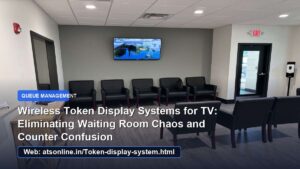
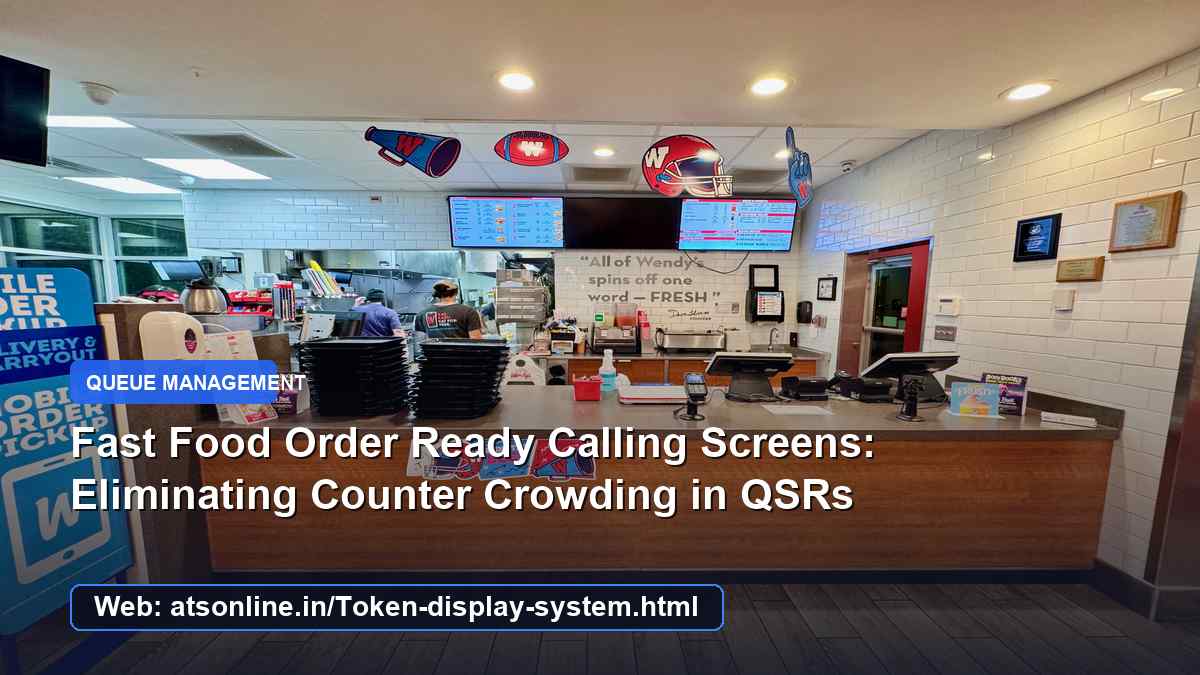
Walking into a bustling Quick Service Restaurant (QSR) during peak lunch rush often resembles entering an organized state of chaos. Customers crowd tightly against the pick-up counter, craning their necks toward the kitchen pass while anxiously listening for shouted order numbers. This familiar bottleneck not only degrades the patron experience but also severely hampers fast food operational efficiency. Fortunately, installing a modern Order Ready Display Screen completely transforms this chaotic environment into a streamlined, high-throughput fulfillment zone.
When hungry diners can track their meal status visually on a digital board, they step back from the pick-up threshold and relax. Furthermore, this structural shift eliminates front-of-house congestion, empowers service staff, and accelerates order velocity. In this comprehensive guide, we will explore how advanced queue management technology solves QSR crowding once and for all.
The Evolution of Order Calling: From Manual Shouting to Digital Screens
For decades, fast food establishments relied entirely on manual methods for announcing completed meals. Cashiers yelled token numbers across noisy dining rooms, or line cooks placed paper tickets on metal spindles while shouting over the hum of deep fryers. However, as restaurant foot traffic grew, these legacy methods cracked under pressure. Shouted numbers lead to severe miscommunication, customer fatigue, and frantic employee burnout.
Consequently, forward-thinking operators transitioned toward a dedicated ATS Token Display System. By replacing archaic plastic tokens and lung power with crisp digital monitors, restaurants instantly modernized their guest journeys. Furthermore, digital screens eliminate auditory confusion in loud environments, ensuring that patrons never miss a beat when their meals are ready for collection.
Key Insight: Modernizing your pick-up counter with an automated order status board reduces perceived wait times by up to 35 percent.
How the ATS Order Ready Display Screen Works
The mechanics behind a high-performing digital order board are remarkably sophisticated yet frictionless for daily operations. When a customer places an order at the POS terminal, the system assigns a unique numerical or alphanumerical token. This identifier prints directly onto the thermal guest receipt, instantly setting expectations.
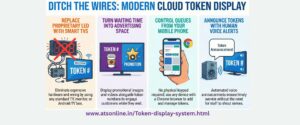
As the kitchen team finishes preparing the meal components, they update the order status with a single tap. The order instantly migrates from the active preparation queue onto the prominent visual screen. The ATS Token Display System features vibrant color coding and gentle auditory chimes that instantly direct the guest’s attention toward the counter.
- Instantaneous Data Sync: Updates register across all connected screens in milliseconds.
- Visual Customization: Operators can display brand colors, logos, and promotional slides alongside token grids.
- Multi-Zone Support: Large venues can route specific tokens to dedicated pickup stations like “Beverages” or “Hot Food.”
Key Features: Two-Column Split Display and Kitchen Pass Integration
Designing an effective fast food counter display requires profound attention to human-computer interaction principles. If a screen is cluttered or difficult to read from ten paces away, it fails its primary purpose. That is why enterprise-grade hardware utilizes a carefully optimized two-column split layout.
The left column typically highlights orders currently “Preparing,” while the right column showcases those marked “Ready.” This transparency reassures guests that their food is actively moving through the pipeline. In addition, deep integration with a kitchen display system KDS ensures that line cooks never have to juggle multiple disconnected software tools.
By synchronizing the kitchen pass directly with the dining room monitors, restaurants achieve unprecedented workflow harmony. Prep times drop significantly because staff members can instantly identify lagging orders and reallocate station resources on the fly.
Boosting Peak-Hour Throughput by 30 Percent
Every second saved at the pickup counter translates directly into higher table turns and increased daily revenue. When patrons cluster around the service window, new arriving customers cannot approach the POS to place orders. This physical barrier creates an invisible ceiling on restaurant sales velocity during peak lunch and dinner rushes.
Implementing an Order Ready Display Screen shatters this bottleneck entirely. Because guests willingly retreat to waiting areas or tables while tracking their food visually, the floor space in front of the counter remains completely clear. Therefore, incoming traffic flows smoothly, order placement accelerates, and overall kitchen throughput climbs by an impressive margin.
Key Insight: Clearing physical congestion at the service threshold allows front-of-house staff to process up to 30 percent more transactions during peak hours.
Furthermore, this operational fluidity minimizes employee stress. Kitchen teams and cashiers no longer field endless interruptions from anxious customers asking, “Is order 404 ready yet?” Instead, staff members focus exclusively on assembly speed and food quality.
Seamless POS and Thermal Receipt Integration
A technology stack is only as strong as its interoperability. Standalone gadgets that require manual double-entry inevitably create friction and human error during hectic shifts. Fortunately, enterprise solutions connect effortlessly with existing point-of-sale infrastructure.
When an order processes through the register, the ticket information flows seamlessly into the display network. Guests receive clear, printed token numbers that match the visual queue perfectly. This synchronization eliminates customer confusion and builds profound brand trust.
Moreover, QSR managers can analyze historical data exported from the display network. By examining average preparation and pickup durations across different day-parts, operators can optimize labor scheduling and ingredient prep quantities with surgical precision.
Measuring ROI and Customer Experience Improvements in Fast Food
Investing in digital infrastructure requires a clear, quantifiable return on investment. Restaurant owners evaluate capital expenditure through the lens of labor efficiency, ticket size, and customer retention. A robust restaurant token display system pays for itself rapidly by eliminating lost orders, reducing food waste caused by miscommunication, and driving repeat visits.
Consider the psychological impact on the diner. When a customer enjoys a calm, orderly waiting experience without elbowing through a dense crowd, their perception of service quality skyrockets. Satisfied guests leave positive reviews, recommend the establishment to friends, and return frequently.
In addition, fast food operational efficiency improves across every shift. Employees spend less time managing crowds and more time delivering exceptional hospitality. Ultimately, upgrading your venue with a reliable digital queue board is not merely an aesthetic choice—it is a foundational business strategy for modern QSR dominance.
Frequently Asked Questions About Order Ready Display Screen
How does an Order Ready Display Screen reduce counter crowding in fast food restaurants?
An Order Ready Display Screen eliminates counter crowding by giving customers visual confirmation of their meal status from anywhere in the dining room. Instead of standing shoulder-to-shoulder directly in front of the pickup window, guests feel comfortable sitting at tables or waiting in designated lounge areas because they know the digital screen will alert them the exact moment their order is prepared.
Can the ATS Order Ready Display Screen integrate with our existing POS system?
Yes, enterprise-grade solutions are built for universal compatibility. The system integrates smoothly with major point-of-sale architectures and thermal receipt printers, ensuring that every transaction automatically populates the queue without requiring manual data entry from your cashiers.
How do kitchen staff update order statuses on the display?
Kitchen staff can update order statuses effortlessly with a single tap on a touchscreen monitor, a dedicated bump bar, or via a synchronized kitchen display system KDS. Once an order is marked complete, the token number instantly transitions to the “Ready” column on the dining room monitors accompanied by a subtle alert chime.
What is the impact of a token display system on peak-order velocity?
Installing a digital token board drastically increases order velocity during peak hours. By clearing physical bottlenecks at the service counter, incoming customers can easily reach the register to place new orders. Meanwhile, kitchen and service teams experience fewer interruptions, allowing them to process transactions up to 30 percent faster.
Ready to revolutionize your restaurant’s service flow, eliminate front-of-house congestion, and elevate guest satisfaction? Discover our industry-leading hardware solutions or contact our solutions team today to schedule a personalized live demonstration.
Ready to Modernize Your Event Ticketing?
Stop losing money on unsold coupon booklets and eliminate long lines with on-demand thermal coupon printing.
🏢 Advance Technology Systems (ATS)
🌐 Website: https://atsonline.in/Token-display-system.html
📞 Phone: +91 9810078010
✉️ Email: ats.fnb@gmail.com
💬 Inquiries: Contact Us at Labhak