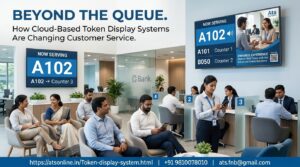
Welcome to the ultimate healthcare clinic guide exploring modern patient queue management technologies. When managing a bustling medical practice, patient flow dictates everything from operational efficiency to perceived care quality, making your choice of a TV Token Display System a foundational business decision. Long wait times and chaotic waiting rooms create immediate anxiety for vulnerable patients, which directly damages the reputation of your practice. Consequently, clinic administrators continually seek advanced hardware solutions that streamline patient journeys while modernizing the overall facility ambiance. To achieve this, clinic managers must carefully evaluate traditional hardware against modern software-driven innovations.
Historically, clinics relied on basic numeric boards to manage patient flow, yet these legacy devices fail to meet contemporary patient expectations. Patients today demand transparency, engaging environments, and clear, audible guidance when entering consultation rooms. Furthermore, healthcare facilities face stringent demands for operational productivity and minimal overhead costs. Therefore, understanding the technological leap from legacy hardware to a smart digital ecosystem is essential for modern medical enterprise success.
Understanding Traditional 7-Segment LED Displays: Limitations in Modern Clinics
For decades, the 7-segment LED display clinic setup served as the undisputed gold standard for basic queue management. These utilitarian red or green light-emitting diode boards display simple three-digit numbers corresponding to active queue tickets. Operating on low-voltage direct current, they consume minimal electricity while providing high-contrast visibility under harsh fluorescent indoor lighting.
However, these legacy systems suffer from crippling functional constraints in modern multi-doctor medical centers. A traditional digital token display for hospital waiting rooms or busy clinics typically limits visibility to a single, blinking number without contextual information. If a patient steps away momentarily, they frequently miss their turn because the static LED board cannot display patient names, token history logs, or counter designations clearly.
Moreover, legacy hardware suffers from severe aesthetic and scaling issues:
- Rigid Limitations: They only display numbers, forcing reception staff to verbally yell out doctor names or room numbers repeatedly.
- Cumbersome Wiring: They often require complex RS485 serial cables or dedicated multi-core wiring running across ceilings and walls.
- Zero Multimedia Capability: They cannot broadcast health advisories, clinic operating hours, or promotional messaging.
Consequently, forward-thinking medical directors now bypass these outdated components in favor of versatile digital alternatives. Transitioning away from legacy hardware eliminates frequent maintenance headaches and unlocks unprecedented operational agility.
The Rise of the TV Token Display System: Features and Architecture
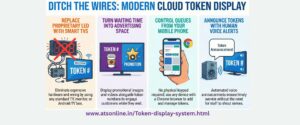
The modern TV Token Display System leverages consumer-grade or commercial smart televisions to completely revolutionize waiting room dynamics. By utilizing high-definition HDMI panels running Android or dedicated streaming boxes, clinics transform ordinary flat-screen TVs into dynamic command centers. This architecture connects seamlessly with advanced patient queue management software running locally or securely in the cloud.
Behind the sleek visuals lies a robust, distributed hardware and software architecture designed for uninterrupted 24/7 healthcare environments. Receptionists issue tokens via physical touch-pads, desktop web portals, or automated self-service kiosks. Simultaneously, the central dispatch engine routes these tokens instantly to specific consultation rooms over enterprise Wi-Fi or standard Ethernet networks.
Key Insight: Upgrading to an Android HDMI token display replaces rigid industrial LED boards with scalable, high-resolution consumer screens that double as patient engagement hubs.
Furthermore, this architectural shift allows medical facilities to scale effortlessly from a single-doctor general practice to sprawling multi-specialty hospital networks. Administrators can group multiple displays by department—such as Pediatrics, Cardiology, or Radiology—while managing all screens from a unified administrative dashboard. This centralized control drastically reduces IT overhead while ensuring consistent branding across every touch point.
Head-to-Head Comparison: Cost, Aesthetics, and Hardware Flexibility
When performing a direct cost-benefit analysis between legacy boards and a smart TV queue management solution, several critical operational factors emerge. While a basic 7-segment LED unit may appear inexpensive upfront, hidden labor and inflexibility costs accumulate rapidly over time. Conversely, modern display systems offer superior long-term ROI through multi-functional utility.
Let us examine how these two distinct technologies compare across three vital enterprise metrics:
- Visual Aesthetics: 7-segment LEDs look industrial and stark, whereas slim-profile LED TVs project a premium, cutting-edge healthcare image.
- Hardware Flexibility: Legacy LEDs are hardwired for single-purpose numeric display; smart TVs serve dual purposes as queue monitors and patient education screens.
- Total Cost of Ownership: Although commercial displays carry a slightly higher initial hardware cost, they eliminate costly custom cabling and proprietary replacement parts.
In addition, smart displays integrate smoothly with existing clinic management software, reducing data entry errors and speeding up check-in procedures. Therefore, administrators who prioritize future-proof investments consistently select flexible TV-based architectures over rigid, single-function hardware.
Advanced Capabilities: Split-Screen Content and Multilingual Voice Announcements
One of the most compelling advantages of deploying a sophisticated TV Token Display System is the availability of customizable split-screen layouts. While the primary quadrant highlights the active token number and assigned doctor, secondary zones can stream engaging infotainment. Clinics can broadcast wellness tips, seasonal vaccination reminders, pharmaceutical advertisements, and local news feeds to reduce perceived wait times.
Furthermore, modern hospital queue display screen software features advanced text-to-speech engines capable of multilingual voice announcements. Instead of relying solely on sharp electronic buzzes or chimes, the system sounds pleasant, human-like voice prompts in regional languages.
Consider the profound operational benefits of this localized auditory guidance:
- Reduced Patient Confusion: Clear vocal calls like “Token number 45, Dr. Sharma, Room 3” prevent patients from wandering into incorrect zones.
- Inclusivity: Multilingual audio support ensures elderly patients or non-native speakers navigate the facility with complete confidence.
- Ambient Calm: Melodic chimes combined with calm vocal cues eliminate the frantic shouting matches often heard in busy waiting areas.
Consequently, these advanced multimedia and audio features directly elevate patient satisfaction scores and foster a more professional clinical environment.
Installation, Wireless Connectivity, and Ease of Maintenance
Deploying new hardware in an active medical facility always raises legitimate concerns about operational downtime and messy installation procedures. Traditional 7-segment setups demand extensive wall drilling and long, unsightly cable runs from reception desks to waiting area walls. In contrast, a modern wireless token display system relies on robust local Wi-Fi or Bluetooth protocols.
This wireless paradigm shift simplifies deployment down to three simple steps:
- Mount the commercial smart TV securely on the waiting room wall using standard VESA brackets.
- Plug the compact ATS token display system streaming device or open the native Android application.
- Connect the display to your secure clinic network and pair it instantly with your receptionist dispatch terminal.
Maintenance becomes remarkably straightforward because software updates occur automatically over-the-air without requiring technician site visits. If a display panel ever fails, replacing it takes minutes using any readily available commercial television, ensuring zero prolonged operational disruption.
Making the Right Choice: Which Display System Suits Your Clinic Size?
Selecting the optimal queue management hardware depends heavily on your specific clinic size, daily patient footfall, and future growth projections. A small single-practitioner dental clinic with minimal footfall might technically function with a basic numeric LED board. However, even smaller practices benefit immensely from the professional aesthetic and health-education capabilities of a compact smart TV setup.
Conversely, multi-specialty medical centers, diagnostic laboratories, and bustling hospital out-patient departments (OPDs) absolutely require an enterprise-grade TV Token Display System. These high-volume environments need robust multi-counter routing, dynamic voice announcers, and centralized analytics to monitor staff efficiency. Investing in scalable software ensures your clinic handles peak morning rushes seamlessly without patient bottlenecks.
Conclusion and Next Steps to Upgrade Your Patient Waiting Experience
In summary, upgrading your clinic queue management infrastructure from rigid 7-segment LEDs to a dynamic TV Token Display System represents a pivotal operational milestone. By combining high-definition visual layouts, split-screen health promotions, and multilingual voice announcements, modern clinics dramatically reduce perceived wait times and patient anxiety. Embracing these technological advancements positions your practice as a forward-thinking, patient-centric healthcare leader.
Are you ready to transform your waiting room experience and streamline your daily patient flow? Explore the industry-leading solutions provided by the ATS Token Display System to discover tailored hardware and software packages for your practice. For personalized consultations, custom pricing, or technical integrations, please feel free to contact our solutions team today and take the first step toward intelligent clinic automation.
Frequently Asked Questions About TV Token Display System
Key Insight: Transitioning to a TV-based queue ecosystem provides long-term flexibility, lower maintenance costs, and vastly superior patient communication compared to legacy hardware.
What is the main difference between a TV Token Display System and a 7-segment LED display?
The primary difference lies in versatility, data capacity, and technology architecture. A traditional 7-segment LED display only shows basic numeric digits using simple light diodes, offering zero contextual information or multimedia capabilities. In contrast, a TV-based system uses high-definition smart screens running sophisticated software to display numbers, patient names, doctor details, waiting lists, and rich multimedia content simultaneously.
Can a TV Token Display System show health awareness videos alongside queue numbers?
Yes, absolutely. Modern display software utilizes customizable split-screen dashboard layouts. While the main section highlights the currently active calling token and consultation room, secondary sections stream engaging health tips, clinic announcements, or educational video content to keep waiting patients informed and entertained.
Do I need expensive specialized hardware to run an Android TV token system?
No, you do not need costly proprietary hardware. Most modern systems operate smoothly on standard commercial Android TVs or budget-friendly media streaming sticks connected via HDMI. This consumer-grade hardware compatibility significantly lowers initial setup expenses and simplifies future hardware replacements.
Does the ATS Token Display System support multiple regional languages for voice announcements?
Yes, the platform features advanced text-to-speech audio engines capable of broadcasting automated voice calls in multiple regional and international languages. This ensures clear, inclusive communication for diverse patient demographics, greatly reducing missed turns and waiting room confusion.
How difficult is it to transition from a wired 7-segment display to a wireless TV-based setup?
The transition is remarkably straightforward and causes zero structural disruption to your clinic. Because modern systems operate wirelessly over your existing secure enterprise Wi-Fi network, you avoid messy cable drilling across walls and ceilings, enabling a clean, professional installation within minutes.
Ready to Modernize Your Event Ticketing?
Stop losing money on unsold coupon booklets and eliminate long lines with on-demand thermal coupon printing.
🏢 Advance Technology Systems (ATS)
🌐 Website: https://atsonline.in/Token-display-system.html
📞 Phone: +91 9810078010
✉️ Email: ats.fnb@gmail.com
💬 Inquiries: Contact Us at Labhak