Imagine walking into your neighborhood bistro at 3:00 PM on a sleepy Tuesday, only to find the entire room buzzing with high-energy excitement. This transformation is the undeniable magic of a cafe stock exchange. By turning everyday beverage ordering into a real-time, gamified trading floor, modern hospitality venues are completely redefining guest engagement. Furthermore, forward-thinking operators are leveraging advanced solutions like ATS Bar Stock Exchange Software to automate dynamic pricing, boost off-peak footfall, and turn routine coffee runs into unforgettable social events.
The hospitality landscape is fiercely competitive, forcing restaurateurs, cafe owners, and Quick Service Restaurant (QSR) operators to look beyond conventional marketing. Traditional menus featuring static pricing fail to capture the modern consumer’s appetite for gamification and interactive experiences. Fortunately, implementing dynamic pricing for cafes shifts the paradigm from passive purchasing to active participation. In this comprehensive guide, we will explore how algorithmic pricing principles, originally pioneered in high-end lounges, are revolutionizing coffee shops, bistros, and campus eateries worldwide.
Understanding the Mechanics of a Cafe Stock Exchange
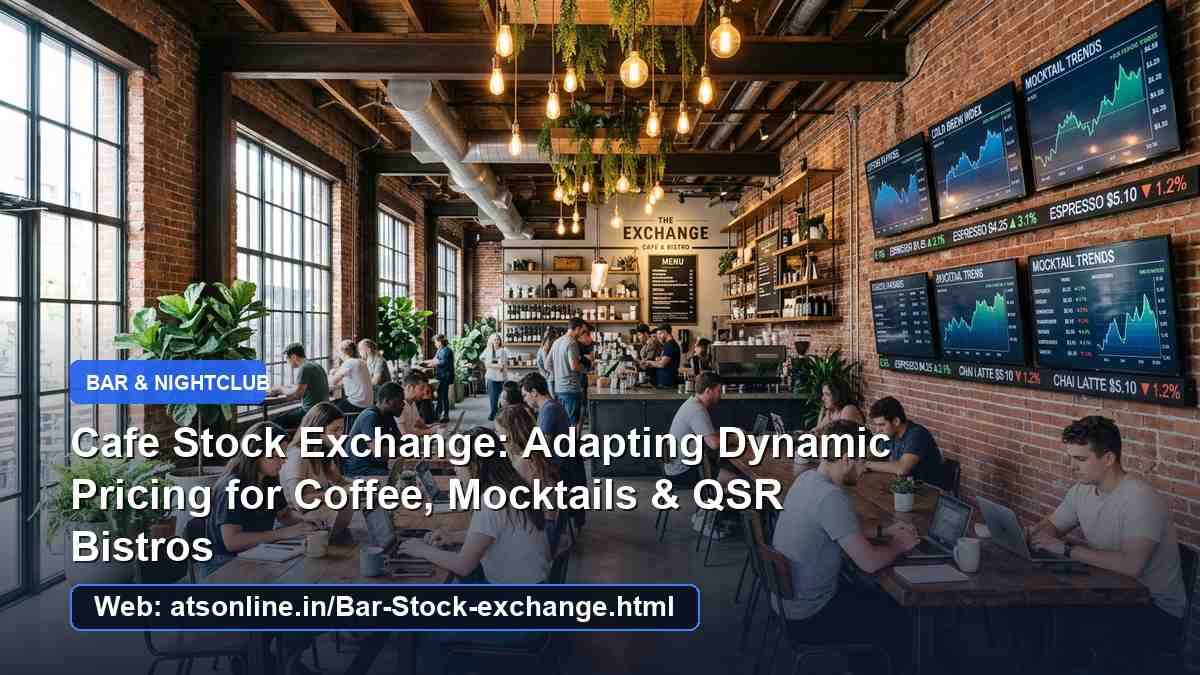
At its core, a cafe stock exchange functions just like a real financial market, but with lattes, specialty cold brews, and artisanal pastries acting as the traded commodities. As guests order specific items, the software algorithmically increases the price of those high-demand beverages in real-time. Conversely, items that remain un-ordered experience price drops, enticing value-seeking patrons to snap up a bargain.
To run smoothly, the system relies on high-definition display screens or digital table-top tablets that continuously broadcast live market tickers. Customers watch the price fluctuations anxiously, strategizing the exact moment to order their favorite artisan espresso or gourmet mocktail. This clever psychological trigger taps into FOMO (Fear Of Missing Out), driving impulse purchases and keeping guests inside the venue much longer.
- Live Market Tickers: Large-screen TVs display shifting drink prices updated every few minutes.
- Algorithmic Triggers: Software automatically adjusts rates based on volume sold versus baseline targets.
- Market Crashes: Periodic simulated market crashes introduce surprise deep discounts, generating massive excitement.
- Interactive Apps: Patrons track prices and place orders directly from their smartphones via integrated ordering portals.
Key Insight: Gamification transforms routine transactional friction into pure entertainment. When guests actively root for a cappuccino price drop, they become brand advocates who eagerly share their experience on social media.
Dynamic Pricing for Non-Alcoholic Beverages and QSR Bistros
While stock market themes were historically reserved for high-volume night bars and pubs, the technology has evolved rapidly. Today, implementing robust bar stock exchange software within daytime bistros and QSR environments is remarkably straightforward. Non-alcoholic beverages—ranging from pour-over single-origin coffees to complex botanical mocktails—offer fantastic profit margins that easily absorb algorithmic price swings.
Consider the typical afternoon slump faced by most urban coffee shops between 2:00 PM and 5:00 PM. By deploying a specialized mocktail pricing algorithm, cafe operators can incentivize patrons to experiment with higher-margin items like matcha lattes or infused sparkling waters. The software ensures that while prices might dip low during quiet periods, they never dip below predetermined cost floors, protecting the business from unnecessary financial leakage.
Furthermore, integrating this dynamic engine into a broader bistro stock market game creates a cohesive brand identity. Customers no longer view your cafe as just another stop for a quick caffeine fix; they view it as a vibrant, dynamic social hub where every visit offers a completely unique pricing adventure.
Transforming Campus Cafes and Co-Working Spaces into Interactive Trading Hubs
Modern consumers, particularly Gen Z and Millennial demographics, crave authentic brand interactions and shared digital experiences. Campus cafes, university student unions, and urban co-working bistros are prime testing grounds for interactive cafe software. These tech-savvy communities thrive on competition, speed, and digital connectivity.
When you introduce a stock market trading format into a student or remote-worker hub, daily routines instantly become social spectacles. Groups gather around display monitors, strategizing when to buy iced mochas or artisanal paninis. Consequently, dwell times increase organically, leading to higher average check sizes as patrons order secondary snacks and desserts while waiting for market conditions to stabilize.
In addition, enterprise-grade technology solutions from providers like Advance Technology Systems ensure that multi-terminal environments remain synchronized without lag. Whether a customer orders from a self-service kiosk, a smartphone app, or directly at the main counter, inventory levels and pricing algorithms update simultaneously across all touchpoints.
Driving Off-Peak Footfall and Maximizing Afternoon Revenue
Every hospitality operator knows the pain of empty dining rooms during traditional lulls between breakfast rushes and evening dinner services. Traditional discounting strategies, such as boring “Happy Hour” signs, often fail to move the needle because they lack urgency and excitement. In stark contrast, automated beverage pricing breathes new life into dead hours by gamifying the waiting period.
When afternoon traffic slows to a trickle, the software naturally allows drink prices to slide toward attractive baseline floors. Word spreads quickly among nearby office workers and students that “the market is crashing at the local bistro.” As a result, waves of eager patrons flood through the doors, eager to capitalize on cheap espresso shots and discounted gourmet teas.
- Automated Off-Peak Incentives: Prices drop automatically when transaction volume dips below predefined thresholds.
- Spontaneous Group Gatherings: Friends mobilize quickly upon seeing a market crash notification on their phones.
- Revenue Smoothness: Hourly sales distribution normalizes, preventing massive operational bottlenecks during peak morning hours.
- Reduced Food Waste: Perishable bakery items can be bundled or dynamically discounted to clear inventory before closing time.
Key Insight: Successful revenue management is not about charging the highest possible price at all times; it is about filling empty seats with profitable volume during historically dead hours.
Seamless POS Billing and Barista KOT Integration with ATS Software
Operating a dynamic pricing model manually is virtually impossible; human calculation errors and slow menu updates would cause immediate chaos behind the counter. Therefore, reliable infrastructure is paramount. Advanced systems synchronize live pricing algorithms directly with your Point of Sale (POS) terminals and kitchen/barista Kitchen Order Tickets (KOT).
When the software adjusts a price due to high demand, that exact figure instantly reflects on the billing screen and customer-facing displays. Furthermore, automated beverage pricing integrates smoothly with inventory management modules. Every cup poured deducts precise ingredient quantities—such as coffee beans, milk varieties, and syrup pumps—from back-end stock ledgers in real time.
This seamless technical synergy eliminates manual pricing errors, speeds up checkout times, and ensures accurate financial reporting at the end of each business day. Staff members do not need to memorize fluctuating prices or manually recalculate tabs; the software handles all complex math seamlessly behind the scenes.
Protecting Profit Margins with Automated Ingredient Cost Floors
A common apprehension among skeptical cafe owners is the fear of runaway algorithms selling premium items below cost price during prolonged market slumps. Modern enterprise applications completely neutralize this risk through strict, configurable boundary parameters. Operators establish absolute minimum selling floors for every single item on the menu.
If an artisanal cold brew costs $1.50 in raw ingredients, labor, and overhead to produce, the system will never allow the trading price to drop below a safe margin—say, $2.25. Conversely, during high-demand rushes, ceiling limits prevent prices from soaring to unreasonable heights that might alienate loyal regulars. This balanced approach ensures sustainable profitability while maximizing customer goodwill.
- Define Cost Baselines: Input exact ingredient and operational expenses for each menu item into the software dashboard.
- Set Floor and Ceiling Limits: Establish absolute minimum and maximum price boundaries to safeguard profit margins and customer trust.
- Monitor Algorithm Performance: Review daily analytics reports to fine-tune supply-and-demand sensitivity multipliers.
- Evaluate Category Health: Analyze which categories (e.g., coffees vs. bakery items) respond best to dynamic price fluctuations.
Implementing Your Own Cafe Stock Exchange: Best Practices and ROI
Transitioning a traditional bistro or coffee shop into a dynamic trading venue requires thoughtful planning and clear communication with your core clientele. Start by introducing the concept gradually—perhaps hosting dedicated “Stock Market Nights” or weekend trading hours before rolling out the system on a full-time basis. Train your front-of-house staff thoroughly so they can guide curious first-time visitors through the ordering process with enthusiasm.
Measure your return on investment (ROI) by tracking key performance indicators such as average transaction value, table turnover rate, and percentage growth in off-peak revenue. Most operators experience a dramatic surge in customer engagement and overall sales volume within the first few weeks of deployment. By embracing cutting-edge retail technology, your venue transforms from a mere pit-stop into a legendary local destination.
Frequently Asked Questions About Cafe Stock Exchange
What is a cafe stock exchange and how does it work?
A cafe stock exchange is an interactive operational model where beverage and food prices fluctuate in real time based on consumer demand. As items sell quickly, their prices rise automatically; conversely, items that experience low demand drop in price. This process creates a gamified, stock market-style environment displayed on live screens throughout the bistro, encouraging guests to engage, strategize, and purchase.
Can dynamic pricing be used for non-alcoholic beverages like coffee and mocktails?
Absolutely. While dynamic pricing originated in high-end bars, it is exceptionally effective for non-alcoholic items such as specialty coffees, teas, artisan mocktails, and fresh juices. These items typically carry healthy profit margins that easily absorb algorithmic price swings, making them perfect commodities for daytime trading formats in cafes, bistros, and QSRs.
How does the software protect profit margins during steep price drops?
The software utilizes strict, pre-configured boundary parameters established by the venue operator. You set absolute minimum price floors and maximum price ceilings for every menu item. Even if an item experiences zero demand during a quiet hour, the algorithm will never let the price drop below your safe cost baseline, completely protecting your business from financial loss.
Does the ATS cafe stock exchange software integrate with existing POS systems?
Yes. Enterprise-grade solutions feature robust API architectures designed to integrate smoothly with most standard POS billing platforms and barista KOT printers. This synchronization ensures that fluctuating prices update instantly across billing terminals, self-service kiosks, and mobile ordering apps without causing operational friction or checkout delays.
How do I attract more customers during off-peak hours using this system?
The system naturally drives off-peak footfall by allowing prices to drop toward their baseline minimums when customer volume is low. When patrons see prices falling or receive automated app notifications about a simulated “market crash,” they are strongly incentivized to visit your cafe during historically slow hours, effectively smoothing out your daily revenue distribution.
Ready to revolutionize your bistro experience and skyrocket your off-peak revenue? Discover how innovative enterprise tools can transform your business by exploring our comprehensive software solutions, or contact our solutions team today to schedule a personalized live demonstration.
Ready to Modernize Your Event Ticketing?
Stop losing money on unsold coupon booklets and eliminate long lines with on-demand thermal coupon printing.
🏢 Advance Technology Systems (ATS)
🌐 Website: https://atsonline.in/Bar-Stock-exchange.html
📞 Phone: +91 9810078010
✉️ Email: ats.fnb@gmail.com
💬 Inquiries: Contact Us at Labhak