
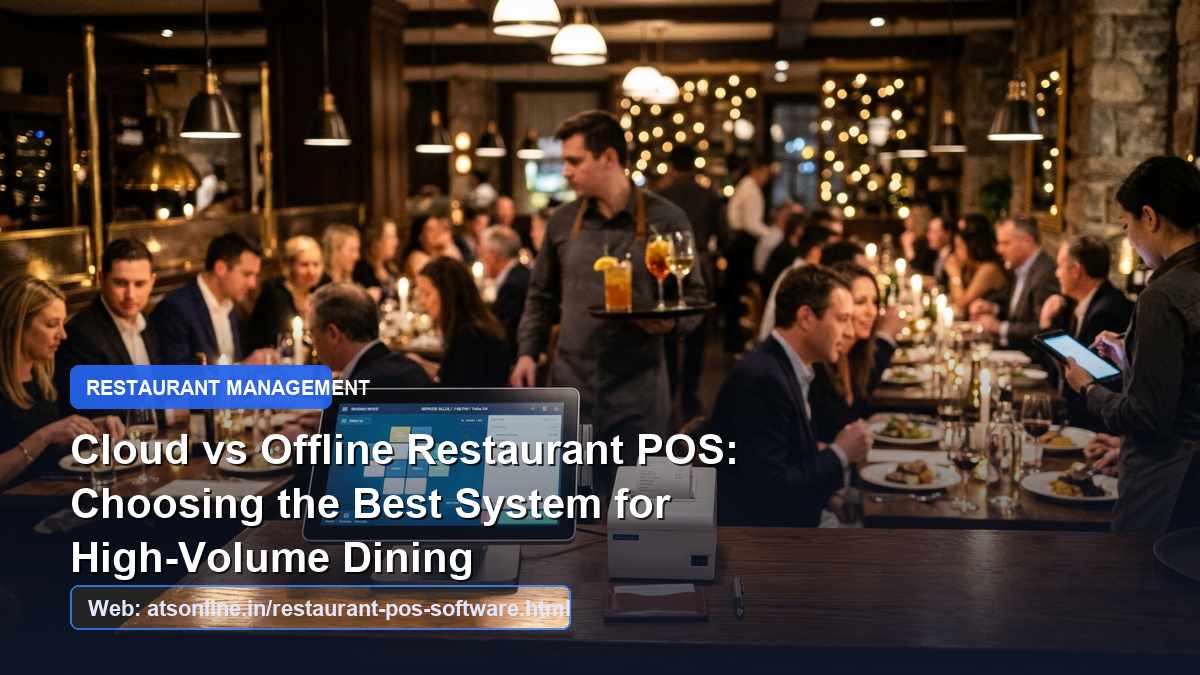
Selecting the right Restaurant POS Software represents one of the most critical foundational decisions any hospitality operator will make. In today’s fast-paced culinary landscape, technology dictates kitchen velocity, table turnover efficiency, and guest satisfaction metrics. Furthermore, choosing between modern architectures can literally mean the difference between a seamless Friday night dinner rush and an operational standstill. Consequently, restaurant owners must carefully evaluate their infrastructure needs before committing to a platform.
Historically, hospitality venues relied on heavy, localized legacy hardware that required extensive wiring and dedicated server rooms. In contrast, modern restaurant software has shifted toward web-hosted platforms and flexible distributed networks. Therefore, deciding whether to deploy a cloud-centric setup, a traditional terminal, or an adaptive model requires deep technical insight. For instance, high-volume dining environments demand absolute up-time, rapid transaction speeds, and unbreakable data security.
Ultimately, your point-of-sale infrastructure must protect your revenue streams while enhancing guest touch-points. Whether you operate a bustling quick-service establishment (QSR) or an upscale fine-dining destination, your technology stack must scale effortlessly. In the following sections, we will explore the nuances of modern architecture, dissecting deployment models to help you make an informed investment.
Understanding Cloud-Based Restaurant POS Systems and Their Limitations
Cloud restaurant POS architectures have dominated industry conversations over the last decade due to their remote accessibility and sleek interface designs. These systems store transactional data, menu configurations, and inventory logs on remote servers managed by third-party vendors. Consequently, operators can review real-time sales dashboards from their smartphones while sitting miles away from their physical storefronts.
However, relying exclusively on remote web servers introduces unique operational vulnerabilities that many operators overlook during initial procurement. Specifically, cloud-based setups depend entirely on continuous, high-speed internet connectivity to process orders, split bills, and authorize credit card transactions. Therefore, any disruption in your broadband service instantly threatens your front-of-house workflow and kitchen communication lines.
Consider the common technical limitations of strictly remote web architectures:
- Total operational freezes whenever local internet service providers (ISPs) experience outages or maintenance downtime.
- Lagging authorization speeds during peak dining hours when local bandwidth becomes saturated with concurrent traffic.
- Heightened cybersecurity risks associated with continuous open ports connecting local terminals to external web servers.
- Recurring subscription overheads that scale upward as you add more terminals and user licenses to your network.
Despite these challenges, web-hosted solutions offer remarkable flexibility for multi-unit operators who need centralized menu management. In addition, software updates deploy automatically across all connected terminals without requiring manual IT intervention on-site. Nevertheless, pairing remote accessibility with local resilience remains the ultimate goal for enterprise-grade hospitality establishments.
The Case for Offline POS Solutions and Reliability During Network Failures
An offline POS system for restaurants provides a stark contrast to web-only models by anchoring data processing directly within local hardware devices. Traditional local terminals process transactions, store guest checks, and route kitchen print jobs via a secure on-premise router. Consequently, these robust systems continue operating at peak performance even when regional internet lines go dark.
During a sudden network outage, restaurants utilizing localized infrastructure experience zero downtime, protecting thousands of dollars in potential revenue. Furthermore, local data processing eliminates the frustrating latency spikes that frequently plague remote setups during busy dinner rushes. For high-volume dining venues, microsecond transaction speeds directly correlate with faster table turns and higher daily revenues.
Key Insight: True operational resilience requires an infrastructure where localized hardware can process credit cards, print kitchen tickets, and split bills independently of external internet availability.
Yet, traditional localized architectures possess their own inherent drawbacks that can frustrate growing business owners. For example, generating consolidated multi-location sales reports requires manual data exports or complex batch synchronization protocols at the end of each business day. In addition, updating menu prices or promotional items often requires touching every individual terminal manually. Therefore, while local reliability is essential, purely disconnected legacy hardware struggles to meet modern multi-channel demands.
Why Hybrid Architecture is the Ultimate Choice for Modern Restaurants
Recognizing the flaws in both extremes, forward-thinking technology developers created the hybrid restaurant POS. This sophisticated model bridges the gap by combining local terminal autonomy with cloud-powered analytics and remote management capabilities. Consequently, operators no longer have to sacrifice up-time for centralized reporting or vice versa.
With a hybrid approach, each local terminal features a robust internal database that mirrors all essential functions of the master system. If your internet connection drops unexpectedly, the POS seamlessly transitions to offline mode without prompting error messages or halting service. Furthermore, once connectivity is restored, the system automatically synchronizes all locally cached transactions with the cloud repository.
Adopting this balanced technical framework delivers numerous operational advantages:
Therefore, forward-thinking operators increasingly demand hybrid functionality when evaluating prospective technology partners. By refusing to compromise between cloud convenience and local durability, businesses safeguard their brand reputation against unforeseen technological failures.
Key Features to Look for in High-Performance Restaurant POS Software
Evaluating high-performance Restaurant POS Software requires looking beyond flashy user interfaces to examine core architectural capabilities. Whether you manage a lively QSR or an intimate bistro, certain operational features remain non-negotiable for long-term commercial success. For instance, kitchen display system (KDS) integration directly influences ticket times and order accuracy.
Furthermore, robust inventory tracking prevents ingredient stockouts and minimizes food waste across your entire supply chain. When evaluating potential platforms, ensure the software offers granular user permission levels to secure cash drawers and sensitive management reports. Additionally, look for built-in customer relationship management (CRM) tools that track guest preferences and dining frequency.
Key feature considerations for high-volume environments include:
- Intelligent split-billing capabilities that handle complex party check distributions effortlessly.
- Offline credit card processing fall backs that securely cache encrypted token data until connectivity returns.
- Multi-station kitchen routing rules that direct specific item modifiers to appropriate prep stations.
- Comprehensive API documentation that supports seamless third-party integrations with accounting and reservation platforms.
Investing in a comprehensive software suite ensures your staff spends less time fighting technology and more time delivering exceptional hospitality. Moreover, streamlined workflows reduce training times for seasonal employees, significantly lowering overall operational overhead.
Comparing Cost, Setup, and Long-Term Scalability
Financial considerations heavily influence technology procurement decisions across the hospitality sector. When analyzing cloud vs offline POS solutions, operators must evaluate total cost of ownership (TCO) rather than focusing solely on upfront license fees. While cloud platforms typically feature low initial entry costs through monthly subscription models, cumulative fees can compound significantly over extended periods.
Conversely, traditional offline hardware setups often require substantial capital expenditures for local servers, dedicated terminals, and ongoing IT maintenance contracts. However, hybrid platforms strike an optimal economic balance by utilizing cost-effective tablet terminals backed by secure local routing hardware. This modular approach allows independent eateries to scale their technology stack incrementally as their business revenue grows.
Consider how these models differ across key financial and operational metrics:
Ultimately, selecting a scalable platform prevents costly technology migrations down the road as your brand expands into new markets.
How ATS Restaurant POS Software Delivers Seamless Offline-First Performance
For operators seeking the ultimate fusion of local reliability and cloud convenience, ATS Restaurant POS Software sets the benchmark for modern hospitality technology. Engineered specifically for high-volume dining, quick-service eateries, and sophisticated fine-dining venues, this platform eliminates the anxiety of network outages. By utilizing an intelligent offline-first architecture, the system guarantees continuous operations regardless of external internet stability.
Furthermore, ATS Restaurant POS Software streamlines front-of-house operations with lightning-fast order entry and intuitive table management tools. Staff members can effortlessly navigate complex modifications, manage split checks, and coordinate kitchen workflows without missing a beat. When internet connectivity fluctuates, local data caching ensures that transactions process smoothly and securely in the background.
Key advantages of deploying this advanced solution include:
- Unbreakable offline redundancy that keeps your billing and kitchen printing functional during severe broadband outages.
- Centralized multi-location management dashboards providing instant visibility into sales trends and inventory levels.
- Advanced inventory tracking that automatically deducts ingredients upon order completion to minimize kitchen waste.
- Seamless integration options that connect your POS directly with accounting platforms and online ordering channels.
By investing in a purpose-built system like ATS Restaurant POS Software, operators protect their daily revenues while optimizing overall enterprise efficiency. Your team gains a reliable technological foundation designed to thrive under the intense pressure of peak operational rushes.
Final Verdict: Choosing the Right POS for Your Dining Establishment
Choosing the correct point-of-sale infrastructure requires an honest assessment of your restaurant’s unique operational demands, environmental vulnerabilities, and growth trajectory. While pure cloud platforms offer appealing remote accessibility, their vulnerability to internet outages makes them risky for high-volume dining environments. On the other hand, purely offline legacy systems lack the centralized reporting and modern agility required in today’s competitive market.
Therefore, deploying a hybrid, offline-first ecosystem represents the smartest strategic choice for modern restaurateurs. This balanced methodology ensures uninterrupted table service, rapid transaction speeds, and comprehensive multi-unit visibility without compromising data security. By prioritizing up-time and flexibility, you safeguard your brand against technical mishaps and deliver a flawless guest experience.
Take the next step toward transforming your hospitality operations by evaluating your current technology infrastructure today. To explore customized deployment options and discover how advanced engineering can elevate your establishment, please contact our solutions team for a personalized consultation.
Frequently Asked Questions About Restaurant POS Software
What happens to my restaurant operations if the internet goes down with a cloud POS?
With a purely cloud-dependent point of sale, an internet outage typically halts order processing, prevents credit card authorizations, and disrupts kitchen ticket printing. This creates severe bottlenecks, frustrates guests, and results in direct financial loss. However, hybrid platforms like ATS Restaurant POS Software utilize local data caching to maintain full operational capability during internet disruptions, syncing your data automatically once connectivity returns.
How does a hybrid restaurant POS software protect against data loss?
Hybrid POS systems maintain local transactional databases directly on on-premise hardware terminals alongside secure cloud repositories. If your local network loses external connectivity, all new orders, guest checks, and payment tokens are safely stored locally. Once the system detects an active internet connection, it executes automated background synchronization, ensuring your cloud reports match your physical drawer totals without manual intervention.
Is a cloud or offline POS better for high-volume quick service restaurants (QSR)?
High-volume quick service restaurants require blistering transaction speeds and absolute system reliability to maintain fast queue velocity. Pure cloud systems can suffer from latency spikes when local bandwidth is saturated. Therefore, quick-service operators benefit most from hybrid architectures that combine lightning-fast local data processing with the centralized management advantages of remote cloud reporting.
Can ATS Restaurant POS Software automatically sync menu and price changes when reconnecting to the internet?
Yes. Centralized management features within advanced platforms allow operators to push menu updates, price adjustments, and promotional items from a master dashboard. When a terminal reconnects to the internet after an offline period, the system automatically pulls these updates down to ensure menu consistency across all terminals and front-of-house touch-points.
What reporting and compliance features should I expect from top-tier restaurant POS software?
Top-tier hospitality platforms should deliver comprehensive real-time analytics covering labor percentages, food costs, category sales, and hourly velocity trends. Furthermore, the software must support secure payment card industry (PCI) compliance, role-based user permissions, and seamless data export capabilities compatible with standard industry accounting platforms like QuickBooks or Xero.
Ready to Modernize Your Event Ticketing?
Stop losing money on unsold coupon booklets and eliminate long lines with on-demand thermal coupon printing.
🏢 Advance Technology Systems (ATS)
🌐 Website: https://atsonline.in/restaurant-pos-software.html
📞 Phone: +91 9810078010
✉️ Email: ats.fnb@gmail.com
💬 Inquiries: Contact Us at Labhak