
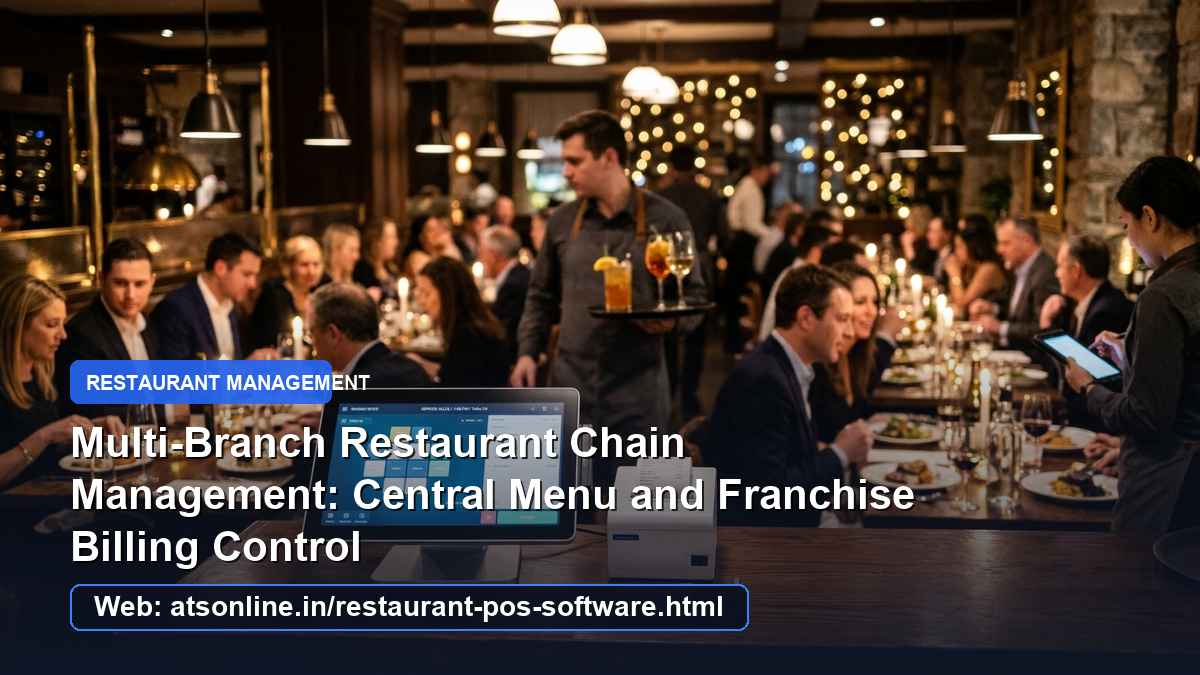
Scaling a culinary brand from a single successful storefront into a regional empire introduces immense operational complexity. As you expand, deploying a robust Multi Outlet Restaurant POS becomes essential to maintain brand consistency, control food costs, and protect profit margins. Managing disparate branch registers without centralized software leads to chaotic pricing, inventory discrepancies, and severe brand dilution. Fortunately, modern enterprise architectures like ATS Restaurant POS Software empower restaurateurs to unify operations effortlessly from a single cloud dashboard. Whether you operate corporate-owned locations or a complex franchise network, unified restaurant chain management software transforms fragmented workflows into a streamlined, high-performing ecosystem.
The Evolution of Multi Location Restaurant POS Infrastructure
Traditional point-of-sale systems treat each dining room as an isolated island, forcing managers to manually update prices, compile daily sales spreadsheets, and reconcile inventory. This legacy approach creates catastrophic vulnerabilities when introducing seasonal menus, limited-time promotions, or price adjustments. Furthermore, manual data consolidation delays executive decision-making by days or weeks, preventing leaders from addressing supply chain bottlenecks or shifting consumer demand trends in real time.
Adopting an advanced multi location restaurant POS changes this dynamic entirely by establishing a single source of truth at headquarters. Consequently, operational leaders can push menu changes, promotional discounts, and tax updates to dozens of terminals simultaneously within seconds. Furthermore, modern multi branch POS software eliminates human error, reduces administrative overhead, and ensures that every customer receives an identical brand experience regardless of which physical storefront they visit.
The Power of Central Menu and Pricing Control Across Outlets
Maintaining brand integrity across a growing enterprise requires strict command over what your customers see, order, and pay for. Central menu management acts as the beating heart of any enterprise hospitality stack, allowing corporate culinary teams to curate master recipes, modifiers, and categories from head office. In addition, you can easily establish localized pricing rules to account for regional cost-of-living differences, delivery aggregator commissions, or municipal tax variances without fracturing your master catalog.
When a chef modifies a signature burger recipe at corporate headquarters, the updated allergen matrix, nutritional data, and ingredient costs propagate instantly across all regional terminals. Furthermore, front-of-house staff never have to worry about serving discontinued items or misquoting daily specials. This seamless synchronization prevents customer dissatisfaction, accelerates order-taking speeds, and ensures precise financial reporting down to the individual SKU level.
Key Insight: Centralized catalog governance eliminates menu drift, ensuring that every branch adheres to corporate standards while retaining the flexibility to adapt to local market nuances.
Streamlining Central Commissary and Store Inventory Transfers
Food cost volatility represents the single greatest threat to restaurant profitability, making tight inventory governance non-negotiable for growing brands. A professional franchise billing system integrates seamlessly with centralized restaurant inventory modules to track stock movements from the central kitchen down to individual branch pantry shelves. Consequently, executive chefs and procurement officers gain complete visibility into ingredient usage, waste patterns, and impending stockouts across the entire enterprise.
When individual branches require raw materials or prepped sauces, managers initiate digital stock requisitions directly through the platform. Restaurant commissary management features then track these internal transfers, automatically deducting items from central warehouse stock while incrementing branch inventory counts. Therefore, shrinkage becomes instantly visible, stock discrepancies are flagged immediately, and purchasing managers can negotiate bulk volume discounts with suppliers with absolute confidence in their demand forecasts.
- Automated stock reorder triggers based on real-time depletion rates.
- End-to-end traceability for batch numbers and perishable expiration dates.
- Precise variance reporting comparing theoretical usage against actual physical counts.
Automating Franchise Billing and Royalty Calculations
Managing financial settlements across a network of independent franchise partners often involves tedious audits, tense negotiations, and delayed payments. A specialized franchise royalty calculation software module automates this entire revenue-sharing life-cycle based on transparent, pre-configured parameters. Whether your franchise agreements dictate flat fees, tiered percentages of gross sales, or deductions for cooperative marketing funds, the software computes these obligations automatically.
Furthermore, the system generates comprehensive financial statements for each franchise partner, detailing gross revenues, tax withholding’s, and net royalty dues transparently. This elimination of manual spreadsheet calculations builds trust between franchisors and franchisees while drastically reducing the administrative burden on your accounting department. Ultimately, automated financial reconciliation ensures healthier cash flow and faster month-end closing cycles for the parent corporation.
Real-Time Consolidated Branch Analytics and Executive Dashboards
Data-driven decision-making separates thriving hospitality groups from those that struggle with thin margins. A sophisticated restaurant chain analytics dashboard aggregates performance metrics from every terminal, kitchen display system, and online ordering channel into a single, intuitive interface. Instead of waiting for weekly manager reports, executives can monitor hourly sales velocities, labor cost percentages, and table turnover rates as they happen.
By leveraging deep historical data trends, multi-unit operators can identify top-performing dishes, optimize staff scheduling curves, and evaluate promotional campaign effectiveness with surgical precision. Furthermore, granular permission settings ensure that local store managers view only their respective branch metrics, while regional directors and C-suite executives enjoy a bird’s-eye view of enterprise-wide performance.
- Monitor live gross revenue and transaction counts across all regions simultaneously.
- Analyze labor-to-sales ratios to eliminate costly over staffing during slow day parts.
- Compare foot traffic and average ticket sizes across different demographic zones.
Ensuring Business Continuity with Offline-First Store Reliability
Internet outages should never bring a bustling dinner service to a sudden halt. Modern enterprise networks require an offline POS for restaurant chains that guarantees continuous operation even when wide-area network connections drop unexpectedly. Local terminal caching stores all transaction data securely on-site, allowing servers to process credit cards, print kitchen tickets, and manage cash drawers without interruption.
Once internet connectivity is reestablished, the system quietly synchronizes all offline transactions, inventory decrements, and sales logs back to the cloud database without manual intervention. This resilient architecture protects your revenue streams, prevents guest frustration during peak hours, and provides absolute peace of mind for both front-line staff and ownership.
Key Insight: An offline-first POS architecture ensures zero downtime during critical service hours, safeguarding your daily revenue and protecting your brand reputation against unexpected network failures.
How to Implement a Multi Outlet Restaurant POS Successfully
Deploying enterprise hospitality technology across multiple locations requires a structured, methodical roll-out plan to minimize disruption to daily guest service. Begin by auditing your existing hardware infrastructure, network security protocols, and menu nomenclature across all target locations. Next, collaborate with implementation specialists to configure your master catalog, tax rules, and user permission hierarchies within a staging environment before pushing live.
Comprehensive staff training remains the ultimate differentiator between a failed software launch and a resounding operational success. Conduct role-based training sessions for cashiers, kitchen staff, and store managers, emphasizing how the new platform simplifies their daily workflows. Finally, establish a dedicated technical support helpline and partner with an experienced provider like ATS Restaurant POS Software to ensure expert guidance throughout your expansion journey.
Frequently Asked Questions About Multi Outlet Restaurant POS
How does a Multi Outlet Restaurant POS update menus across multiple locations?
The system utilizes a cloud-based master catalog managed from a central corporate dashboard. When administrative users modify recipes, prices, or modifiers, the software pushes these updates instantaneously to every connected terminal across all regional branches, ensuring absolute brand consistency.
Can central commissary kitchens track inventory dispatches to individual branches?
Yes, integrated restaurant commissary management tools allow central warehouse operators to track stock requisitions, packing lists, and dispatch logs. As goods leave the commissary and arrive at a branch, the software automatically adjusts inventory levels in both locations, maintaining complete supply chain transparency.
How is franchise billing and royalty calculation automated in chain POS software?
The platform tracks gross sales, discounts, and tax revenues across all franchise terminals in real time. Based on pre-set legal agreements—such as percentage-based royalties or fixed marketing fees—the software automatically computes monthly obligations and generates transparent financial statements for both parties.
What happens to branch operations if the internet connection fails?
An offline-first multi branch POS software architecture allows local terminals to continue processing cash and credit card transactions, printing kitchen orders, and managing tables locally. Once connectivity returns, all stored transaction data syncs automatically to the cloud without disrupting service.
Ready to scale your restaurant enterprise with absolute operational control? Discover how our robust ecosystem can transform your multi-unit operations by exploring the ATS Restaurant POS Software features, or feel free to contact our solutions team today to schedule a personalized enterprise demonstration.
Ready to Modernize Your Event Ticketing?
Stop losing money on unsold coupon booklets and eliminate long lines with on-demand thermal coupon printing.
🏢 Advance Technology Systems (ATS)
🌐 Website: https://atsonline.in/restaurant-pos-software.html
📞 Phone: +91 9810078010
✉️ Email: ats.fnb@gmail.com
💬 Inquiries: Contact Us at Labhak