
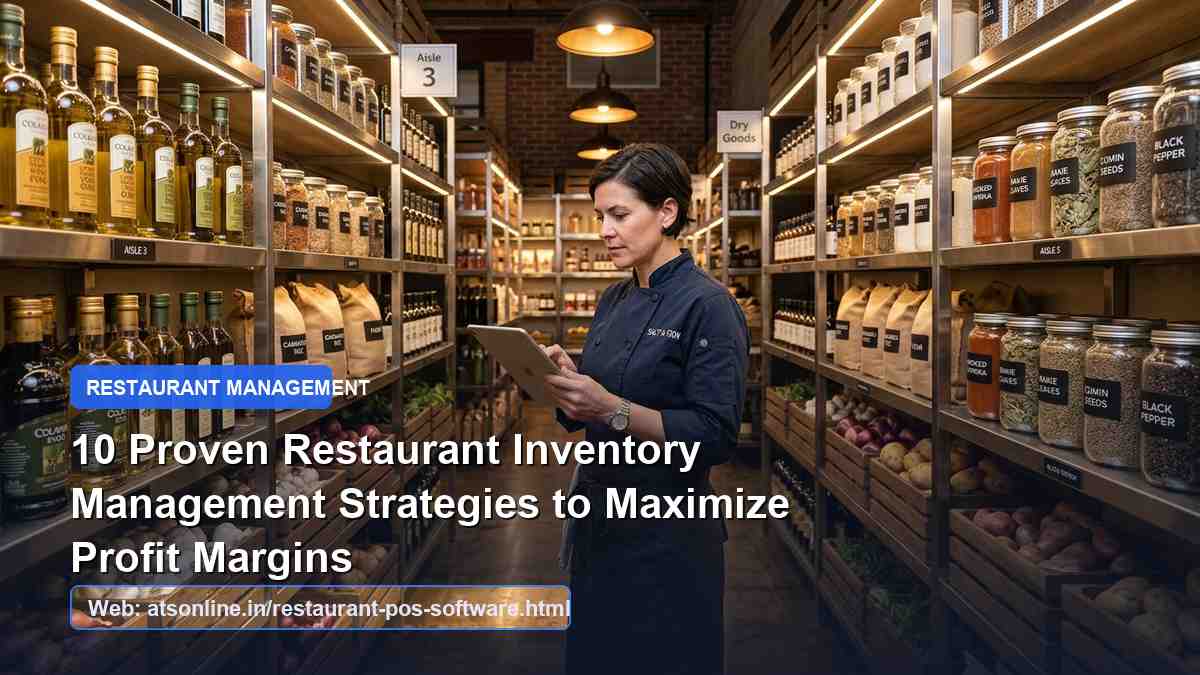
Mastering Restaurant Inventory Control is the single most critical differentiator between thriving hospitality enterprises and those struggling to survive on razor-thin margins. Furthermore, in an industry where food and labor costs continually fluctuate, unchecked stock losses can quickly erode your daily revenue. Therefore, implementing systematic restaurant inventory management strategies is no longer optional; it is essential for long-term financial survival.
When you optimize your stock levels, you instantly unlock valuable working capital. Consequently, operators can redirect these funds toward marketing, staff retention, and expansion. In this comprehensive guide, we will explore ten actionable strategies designed to minimize food waste, eliminate shrinkage, and significantly maximize your bottom-line profitability.
Strategy 1: Automating Ingredient Deduction with POS Integration
Manual stock tracking on paper or disjointed spreadsheets invites human error and massive discrepancies. Fortunately, modern technology bridges this gap by automatically deducting ingredient quantities every time a dish is sold. For example, when a customer orders a cheeseburger, your system should instantly subtract buns, patties, cheese, and lettuce from your digital ledger.
Utilizing advanced solutions like ATS Restaurant POS Software ensures that your front-of-house sales seamlessly sync with your back-of-house inventory. Consequently, you gain real-time visibility into your current stock levels without spending hours manually counting items at the end of a grueling dinner service.
Key Insight: Automating your ingredient deduction eliminates guesswork, ensures true real-time stock visibility, and stops internal shrinkage before it impacts your financials.
Strategy 2: Implementing Strict Variance and Wastage Tracking
Every single kitchen produces waste, but uncontrolled waste acts as a silent profit killer. Therefore, you must establish a rigid logging protocol for burned food, spilled ingredients, over-portioning, and dropped items. Moreover, tracking these losses highlights operational training gaps among your culinary staff.
To master restaurant inventory control, you must regularly compare your theoretical food cost against your actual physical usage. Furthermore, significant variances between these two numbers usually indicate unrecorded waste, over-pouring at the bar, or outright theft. By identifying these gaps early, you can take corrective action immediately.
Strategy 3: Leveraging Menu Engineering and Recipe Cost Calculators
Not all menu items contribute equally to your gross profitability. In addition, rising wholesale food prices mean that a dish that was profitable last quarter might be losing money today. Therefore, implementing a robust recipe costing calculator is critical for accurately pricing every single item on your menu.
- Calculate the exact cost of raw ingredients for every recipe.
- Categorize menu items using menu engineering matrices (Stars, Plow-horses, Puzzles, Dogs).
- Promote high-margin dishes while re-pricing or removing unprofitable items.
Ultimately, menu engineering ensures that your most popular offerings also deliver the highest return on investment. Furthermore, it empowers your culinary team to substitute seasonal ingredients without compromising dish quality or profit margins.
Strategy 4: Streamlining Purchase Orders and Vendor Invoicing
Managing multiple food and beverage suppliers often leads to disorganized paperwork and costly invoice discrepancies. Consequently, restaurants frequently overpay for deliveries simply because nobody cross-referenced the received goods with the original purchase order. Therefore, centralizing your vendor invoice management is a crucial step toward achieving optimal food cost reduction techniques.
When you digitize your purchasing workflows, you gain leverage during price negotiations. Furthermore, an integrated point-of-sale platform helps you track historical pricing trends across different suppliers. As a result, you can easily spot sudden price hikes and switch to cost-effective alternatives before they hurt your margins.
Strategy 5: Establishing Regular Physical Stock Counts and Audits
Relying solely on digital inventory tracking is a recipe for disaster. Therefore, successful hospitality operators schedule weekly or monthly physical stock counts to reconcile their digital ledger with reality. Furthermore, rotating high-value items like premium proteins, seafood, and liquor through frequent cycle counts prevents sudden end-of-month surprises.
- Assign specific inventory zones to trained staff members.
- Conduct counts during off-peak hours to ensure maximum accuracy.
- Reconcile discrepancies immediately to identify root causes.
Regular auditing not only maintains data integrity, but it also discourages internal theft. When employees know management actively monitors stock levels, accountability naturally increases across the entire team.
Advanced Restaurant Inventory Control for Growing Enterprises
As your restaurant concept grows into multiple locations, inventory management complexity multiplies exponentially. Therefore, scaling brands must rely on unified enterprise technology to maintain strict quality control across every storefront. Integrating robust restaurant POS software inventory features ensures standardized recipes and uniform purchasing power across all branches.
Strategy 6: Setting Up Minimum Reorder Alerts to Prevent Stockouts
Running out of core ingredients during a bustling Friday night dinner service damages customer trust and destroys potential revenue. Conversely, over-ordering perishable goods leads to spoilage and wasted capital. Therefore, setting up automated minimum reorder thresholds is vital for maintaining optimal stock levels.
Smart systems automatically trigger purchase notifications when ingredient supplies drop below a predefined safety margin. Consequently, your kitchen never faces sudden stockouts, and your storage walk-ins remain free from overcrowded, expiring items. This balance ensures smooth, uninterrupted kitchen operations every single day.
Strategy 7: Managing Multi-Store Transfers for Expanding Kitchen Chains
If you operate a multi-unit restaurant group or a central commissary kitchen, stock transfers between locations happen constantly. However, without a transparent tracking mechanism, transferred ingredients often disappear into administrative blind spots. Therefore, utilizing centralized restaurant stock management tools ensures every transfer is accounted for, taxed properly, and logged against the correct location’s P&L statement.
Key Insight: Multi-store transfer tracking prevents phantom inventory losses and gives multi-unit operators a crystal-clear view of localized consumption rates.
Strategy 8: Enforcing First-In, First-Out (FIFO) Storage Protocols
The FIFO method is a timeless hospitality principle that remains essential for effective stock control. By placing newly delivered goods behind older stock, you ensure that older items get used first. Furthermore, proper labeling and date-stamping drastically reduce food spoilage and prevent costly health code violations.
Train your prep staff to inspect incoming deliveries rigorously. If an ingredient is close to its expiration date, adjust your daily specials to feature that item prominently. Consequently, you turn potential waste into profitable revenue streams.
Strategy 9: Training Kitchen Staff on Portion Control and Yield Management
Even the best digital inventory system cannot prevent over-portioning in a chaotic kitchen. Therefore, you must invest time in training your line cooks on proper portion control guidelines and yield percentages. For example, trimming a whole beef tenderloin results in a specific usable yield versus waste ratio.
When your culinary team understands the financial impact of every ounce of food, waste decreases dramatically. Furthermore, consistent portioning ensures that every customer receives the exact same high-quality dining experience, which builds long-term brand loyalty.
Strategy 10: Utilizing Analytics and Historical Sales Data for Forecasting
Predictive analytics represent the future of profitable restaurant operations. Instead of guessing how many ingredients to order for the upcoming weekend, smart operators rely on historical sales trends, weather forecasts, and local event schedules. Consequently, your purchasing orders align perfectly with anticipated consumer demand.
Advanced reporting tools highlight seasonal consumption patterns and slow-moving inventory items. Armed with this data, you can optimize your purchasing schedules, reduce holding costs, and continuously improve your overall operational efficiency.
Frequently Asked Questions About Restaurant Inventory Control
How does automated POS inventory deduction improve restaurant profit margins?
Automated POS inventory deduction instantly subtracts ingredients from your digital ledger with every sale. This real-time tracking eliminates manual counting errors, prevents over-ordering, and stops internal shrinkage. Consequently, your restaurant minimizes food waste and protects your hard-earned profit margins.
What is the difference between theoretical and actual food cost in a restaurant?
Theoretical food cost represents the exact cost of ingredients used according to your standardized recipes and sales mix. Actual food cost, however, includes the real-world value of all consumed, wasted, spilled, or stolen ingredients determined by physical audits. Comparing these two metrics exposes hidden operational leaks.
How can menu engineering help identify high-profit menu items?
Menu engineering categorizes your dishes based on their overall profitability and sales popularity. By analyzing these metrics, restaurateurs can spotlight high-margin items (“Stars”), re-recipe under-performers, and eliminate unprofitable dishes (“Dogs”), thereby optimizing total kitchen profitability.
Why is vendor invoice management critical for restaurant inventory control?
Vendor invoice management ensures that your restaurant is billed correctly for delivered goods. By cross-referencing digital purchase orders with physical invoices, you catch unexpected price increases, missing items, and billing errors before they damage your financial bottom line.
How does ATS Restaurant POS Software prevent kitchen theft and food shrinkage?
ATS Restaurant POS Software provides exhaustive audit trails, user permission controls, and real-time variance reporting. By tracking every sale, comp, void, and ingredient deduction automatically, management gains total visibility, making unauthorized stock removal nearly impossible.
Conclusion: Maximizing Restaurant ROI with Advanced Inventory Software
Achieving sustainable profitability in the modern hospitality industry requires absolute mastery over your back-of-house operations. By combining disciplined physical stock audits with powerful digital automation, you can eliminate waste and boost your bottom line. Furthermore, implementing the ten strategies outlined in this guide transforms your inventory from an administrative headache into a powerful strategic advantage.
Ready to revolutionize your stock management and maximize your profit margins? Discover how our industry-leading platform can transform your enterprise by exploring ATS Restaurant POS Software today. For personalized guidance, implementation support, or a live platform demonstration, please feel free to contact our solutions team.
Ready to Modernize Your Event Ticketing?
Stop losing money on unsold coupon booklets and eliminate long lines with on-demand thermal coupon printing.
🏢 Advance Technology Systems (ATS)
🌐 Website: https://atsonline.in/restaurant-pos-software.html
📞 Phone: +91 9810078010
✉️ Email: ats.fnb@gmail.com
💬 Inquiries: Contact Us at Labhak